
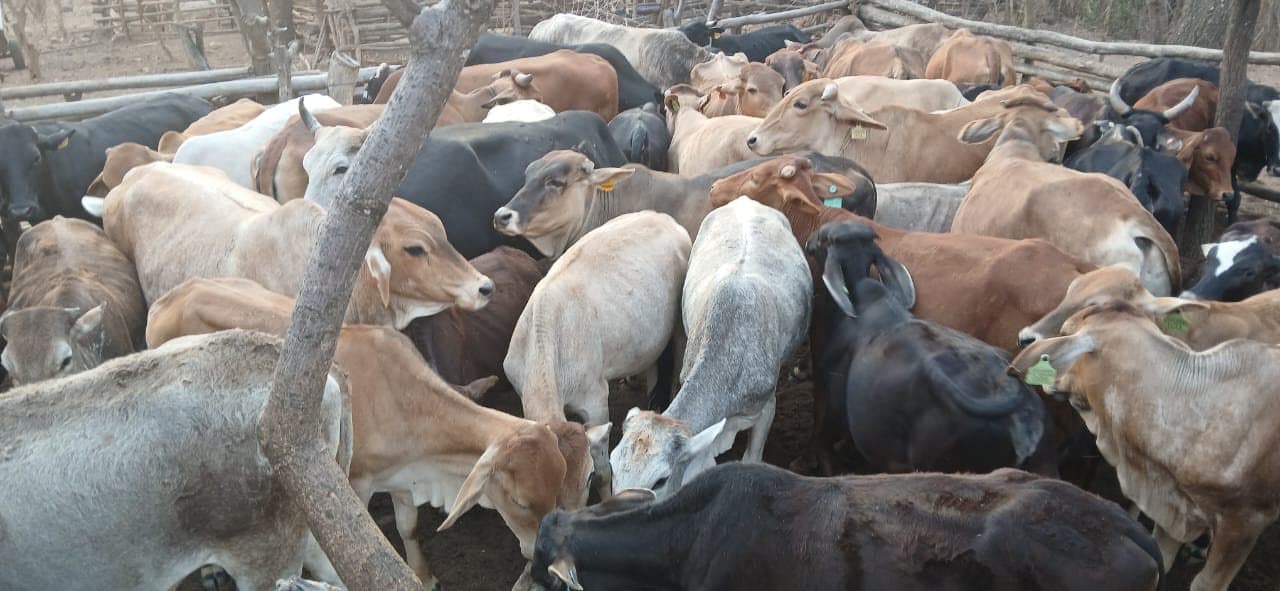
The breed
Why Boran
Cattle built by Africa, for Africa, and the reason we chose them to build our stud around.
Centuries in the making
The Boran's story starts with the zebu cattle that came into north-east Africa from the 4th century AD, with the major migrations following the Arab invasions from 669 AD. From that stock came the Borana cattle of southern Ethiopia, the dominant type of the region, kept for centuries by the Borana people of Ethiopia and the Somali and Orma herders of Kenya. There were no laboratories and no stud books, just hard country, careful herding, and generations of natural selection that kept the animals best suited to survive and produce.
From those herds, commercial cattlemen in Kenya developed the modern Boran we know today. Genetic studies at the International Livestock Research Institute have shown the Boran genome is unique, carrying three distinct influences: predominantly zebu (Bos indicus), alongside Near East-European Bos taurus and an indigenous African Bos taurus background found in no Asian zebu breed. A genuinely African animal, shaped by heat, drought, disease, and distance, and all the tougher for it.
From Kenya to a national breed
The Boran arrived in Zimbabwe in 1993, when embryos were imported from Kenya to Forrester Estates.
First introduced at Forrester Estates
Embryos imported from Kenya
Over 75 registered breeders
Verified Boran facts
Key points drawn from the Zimbabwe Boran Breeders Society and breed records.
Bred for the conditions, not against them
Every trait below was selected the hard way, over centuries. Together they make the Boran one of the most practical beef breeds in the world.
Heat & disease resistance
A loose, mobile hide, dark pigmented skin, and natural tick resistance mean the Boran handles heat and shrugs off the diseases that trouble exotic breeds. Less treatment, fewer losses, lower costs.
Drought tolerance
Boran can go two to three days without water and keep grazing. In a continent of dry seasons and unreliable rain, that resilience is not a luxury. It is the difference between a herd that survives and one that does not.
Exceptional mothering ability
Easy calving, strong maternal instinct, plenty of milk, and fierce protection of the calf. Boran cows raise a good calf every year with minimal intervention. That is the foundation of any profitable herd.
Early maturity & feed efficiency
Boran reach breeding condition early and convert feed efficiently, turning grass into growth with very little waste. That means faster returns and lower input costs over the life of the animal.
Strong herd instinct & calm temperament
Boran stay together, move together, and handle quietly. A calm, tight herd is safer from predators, easier to manage, and far less stressful to work, for the cattle and the people.
Fattens on poor roughage
Where other breeds lose condition, the Boran holds and even gains on poor-quality roughage. It makes productive use of marginal grazing that would not sustain more demanding cattle.
Get in touch
Let's talk cattle.
Whether you want to talk Boran, visit the farm, or simply say hello — reach out. WhatsApp is the easiest way to find us.
muoziboran@gmail.com · WhatsApp +1 (646) 989-0046